


Weekly Crypto Outlook – December 8, 2025
Crypto markets remain in a fragile consolidation, driven largely by macro uncertainty and tight liquidity conditions. Bitcoin continues to struggle near the 93,500–94,500 USD zone, while Ethereum faces pressure from negative funding and elevated open interest. Strategic positioning stays defensive ahead of the December 10 FOMC risk event.


TL;DR
Crypto markets remain in a fragile consolidation with price action driven more by macro uncertainty and shifting liquidity conditions than by internal momentum. Bitcoin’s failed attempt to break through the USD 92,000 downtrend line and its inability to hold gains near the USD 93,500 to USD 94,500 liquidation zone reinforce that the market remains in a tactical bear phase that began in mid-October. Ethereum continues to lag, with deeply negative funding and elevated open interest signalling heightened two-way volatility rather than directional conviction.
Macro remains the dominant force. Stress in the long end of Japan’s bond market is tightening global liquidity expectations, while softer US job data increases the likelihood of a December rate cut delivered with hawkish guidance. This combination has kept risk appetite muted and limited the upside impact of improving sentiment indicators. ETF flows remain negative for both BTC and ETH, underscoring that institutional capital is waiting for clearer policy signals before reengaging.
Stablecoin issuance continues to rise, but appears partially detached from trading demand, suggesting caution rather than aggressive accumulation. Altcoins remain highly selective, with most rotation attempts failing to hold. SOL is one of the few names showing early signs of forming a low range base, but confirmation requires broader market reversal signals.
The strategic stance remains defensive. December 10 is a key risk event, and a hawkish cut with a pause signal could leave bulls without a catalyst into year-end. Positioning is best kept tactical: treat USD 93,500 to USD 94,500 as Bitcoin’s pivot, avoid new ETH exposure until funding normalises, and keep altcoin exposure concentrated in liquid majors with clear catalysts.
In this week’s note
Macro View
Market Movers & Events – Last Week
Key Macro Drivers – The Week Ahead
Market Outlook
1. Macro View
Japan’s bond stress tests global liquidity
This week’s macro narrative has been dominated by Japan. Stress in the long end of the Japanese government bond curve is increasing, highlighted by a weak 20 year JGB auction with a wide price tail and soft bid to cover. This does not guarantee a disorderly unwind of the yen funded carry trade, but it is a clear signal that a market which has long anchored global yields is becoming less stable.
For years, Japanese institutions have supported global bond markets through heavy overseas purchases and currency hedged flows. If even a modest portion of that capital is repatriated, global liquidity would tighten. That risk is now higher, and markets are already sensitive to it.
Crypto feels this through the lens of global risk assets. Many investors still read higher US long term yields as a purely domestic fiscal story, but the broader picture links US Treasuries and equities to Japanese flows. As the probability of repatriation rises, high beta assets face a more challenging backdrop. Bitcoin has reflected this caution by trading lower alongside other risk assets, even if, over time, stress in sovereign bond markets could strengthen the “alternative store of value” narrative.
Softer US job data and an approaching “hawkish cut”
US employment data added another layer of uncertainty. The latest print came in at minus 32,000 jobs versus expectations of plus 10,000, reinforcing the case for a December rate cut. Even with cuts on the horizon, financial conditions remain tight, and the combination of weaker growth and cautious policy communication has weighed on risk appetite.
Tactically, we have remained cautiously optimistic, but even that restrained view is struggling to materialise. The Fed is likely to deliver a hawkish cut on December 10, its third, and then signal a pause rather than a full cutting cycle. That pattern typically favours “sell the news” dynamics rather than late year upside, especially when positioning is already fragile. Without a final wave of institutional FOMO before Christmas, markets are left to grind sideways.
Stablecoin concerns and the Tether debate
Concerns about Tether solvency resurfaced in market commentary, but current balance sheet data suggests those fears are overstated. Reported reserves exceed liabilities by several billion dollars, and profit generation has been strong, supported by interest income on reserve assets.
Stablecoin risk can never be dismissed entirely, given the central role of USDT and USDC in crypto liquidity and collateral. However, the current picture does not point to an imminent systemic vulnerability. Instead, the debate reinforces a broader theme: investors are paying closer attention to reserve quality, asset mix, and transparency, and are increasingly distinguishing between stablecoins on those factors.
DAT sector recalibration
The Digital Asset Treasury (DAT) sector continues to adjust after this year’s steep correction. Many companies with limited operating businesses and outsized in house token positions now trade below the value of their underlying assets. Some are responding with further equity issuance, while others are considering buybacks or targeted token sales.
As investors become less tolerant of excessive dilution and speculative balance sheet expansion, DAT structures that rely mainly on token appreciation and repeated capital raises will likely be repriced lower, while those with sustainable cash flows and transparent capital allocation policies should benefit.
2. Market Movers & Events – Last Week (Dec 1 – 7)
Price action
Crypto market capitalization was unchanged at approximately USD 3.1 trillion.
Average weekly volumes were USD 132 billion, about 4 % above average.
Bitcoin weekly volume was USD 64 billion, about 7 % above average
Ethereum weekly volume was USD 24.2 billion, about 15 % above average
Ethereum network fees were around 0.04 Gwei, consistent with very low on-chain activity
Bitcoin traded up toward the liquidation zone at USD 94,500 but stalled before it could break out. The USD 92,000 region continues to act as a ceiling, with rallies failing quickly at the downtrend line even as US equities remain relatively resilient.
Ethereum mirrored this pattern. Attempts to extend above USD 3,200 failed, keeping price within a broader downtrend channel and confirming that the latest bounce is still a repair phase rather than a fresh impulse.
Flows and positioning
Futures
Bitcoin funding rate fell to about 2 %
BTC futures open interest declined USD 1.3 billion to USD 28.4 billion
The Ethereum funding rate dropped sharply this week into negative territory, marking one of the most extreme readings of the past year and signalling aggressive short hedging.
ETH open interest increased USD 1.2 billion to USD 17.4 billion
ETFs
BTC ETF outflows: USD 87 million over 7 days, USD 2.8 billion over 30 days
BTC ETFs have sold USD 4.7 billion since October 29
ETH ETF outflows: USD 66 million over 7 days, USD 1.3 billion over 30 days
ETH ETFs have sold USD 2.1 billion since October 29
Dominance
USDT market cap: USD 185.6 billion (+0.54 %)
USDC market cap: USD 78.1 billion (+2 %)
Weekly stablecoin issuance: USD 2.5 billion
30-day issuance: USD 4.9 billion
Tether solvency fears resurfaced but current reserves and earnings data do not indicate systemic risk.
Key Headlines
Ancient Citadel
Citadel Securities has asked the US SEC to tighten oversight of decentralised finance protocols and tokenised securities markets. The firm argues that these venues can replicate equity and derivatives activity without offering the investor protections and market structure safeguards embedded in traditional exchanges. The proposal sparked strong backlash from crypto industry participants, who see it as an attempt by legacy finance to curb on chain competition just as tokenised markets and DeFi volumes gain traction. The episode highlights a deepening fault line between traditional intermediaries and open blockchain infrastructure.
Canton Network expanding
Digital Asset, the company behind the privacy focused Canton Network for institutional tokenised markets, secured new strategic investment from major Wall Street institutions including BNY, Nasdaq, iCapital, and S&P Global. The round underscores growing traditional finance commitment to shared on-chain infrastructure for real world asset tokenisation and interoperable settlement. Canton is increasingly positioned as a key enterprise grade rail in a hybrid finance stack in which regulated institutions operate on permissioned yet interoperable ledgers. CoinShares is among the network’s whitelisted validators.
Warning and concerns in Italy
Italy’s markets regulator Consob warned crypto asset service providers that the MiCA transition window is closing and stressed that firms must obtain full authorisation to keep serving Italian clients once the national grandfathering period ends on 30 December 2025. The communication reflects Italy’s tougher stance on “regulatory shopping” and uneven MiCA implementation across the EU. Authorities are signalling that late movers risk business interruption or exclusion from the market after the deadline. Italy’s Economy Ministry and macroprudential bodies have also launched an in depth review of crypto asset risks and the adequacy of current safeguards, with particular attention to retail exposure.
3. Key Macro Drivers – The Week Ahead (Dec 8 – 14)
Key Event:
December 10 FOMC meeting
View:
The December 10 FOMC meeting is likely to deliver a hawkish cut and a pause signal. That is typically a “sell the news” pattern when risk appetite is fragile, and flows are negative.
The Japan story remains the key global liquidity variable, with any acceleration in repatriation posing downside risk.
ETF flows confirm that institutional capital is reacting primarily to Powell’s tone. Without dovish forward guidance, rate cuts alone are insufficient to attract flows back into Bitcoin or Ethereum.
4. Market Outlook
Liquidity and Positioning
Bitcoin Fear and Greed Index: 28 % (up from 4 %)
Ethereum Fear and Greed Index: 50 % (up from 5 %)
Both indicators show stabilisation, not a trend reversal.
Bitcoin (BTC)
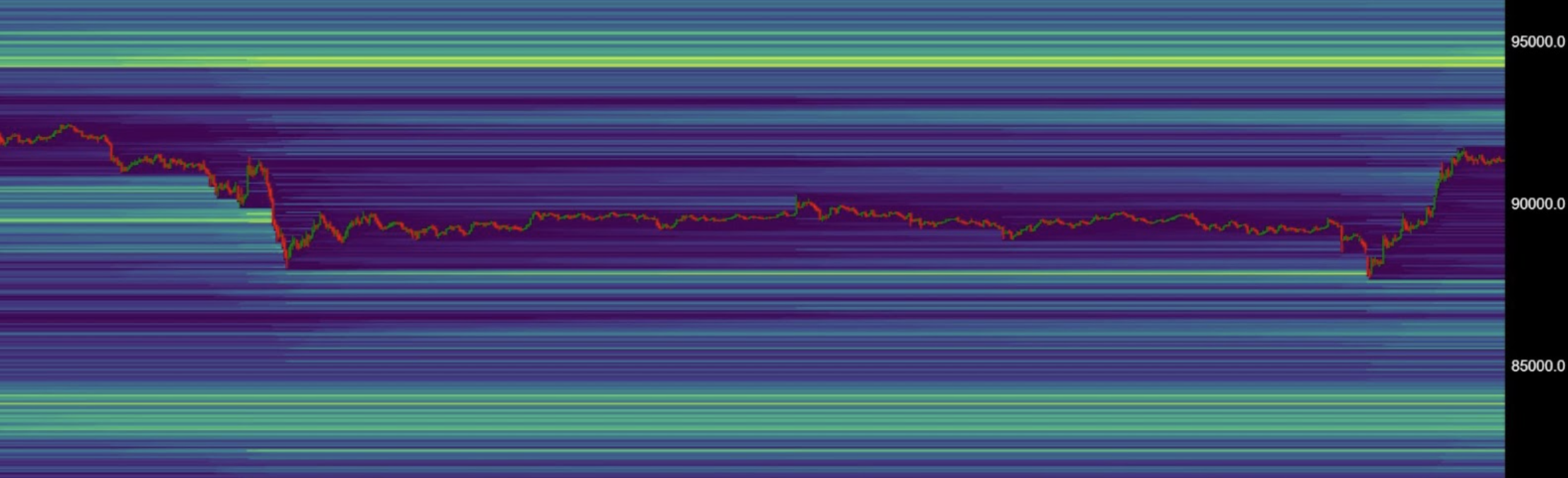
BTC remains inside a medium term downtrend since mid-October.
Key levels:
Short-term pivot: at USD 94,500 (liquidation pool)
Major bull or bear line: USD 100,000
Failure to reclaim resistance leaves risks skewed toward the low USD 80,000 region.
Ethereum (ETH)
ETH remains capped by the USD 3,200 resistance area.
A reclaim would be the first meaningful improvement.
Funding skew and rising OI suggest hedged positioning ahead of FOMC.
Altcoins
Altcoin behaviour remains inconsistent. In this environment, altcoin exposure should remain focused on liquid majors with clear catalysts and robust market structure.

Copyright © 2026 Rain Trading Limited