


Weekly Crypto Outlook – December 29, 2025
Crypto markets close the year with compressed volatility and thin liquidity, while derivatives signal growing fragility beneath the surface. Although downside liquidity risks remain elevated in the near term, structural adoption, regulation, and institutional integration continue to strengthen the long-term investment case heading into 2026.


TL;DR
Crypto markets are entering the new year with activity near cycle lows, yet derivatives and options markets suggest growing fragility beneath the surface. Volatility has compressed, funding rates are drifting higher, and leverage remains elevated relative to participation. ETF outflows and stablecoin off-ramps continue to cap upside, while options expiry has removed a key suppressor of price movement. Near term, markets remain range-bound and liquidity-driven, with a higher probability of a downside liquidity sweep before any sustained recovery. Structurally, however, the digital asset ecosystem continues to mature, with consolidation, regulation, and real-world adoption reinforcing the longer-term investment case into 2026.
Structural Outlook 2026
From speculation to integration
As crypto markets transition out of the current cycle, the dominant driver into 2026 is unlikely to be price momentum alone. The more durable shift is structural adoption.
Digital assets are increasingly being absorbed into the existing financial system rather than attempting to disrupt it from the outside. Stablecoins are evolving into settlement infrastructure for cross-border payments, treasury management, and on-chain financial services. Tokenised assets are moving from pilot programmes to real issuance, particularly in money markets, funds, and collateral management. Market infrastructure is consolidating as regulated players scale, acquire, and integrate specialised capabilities.
Bitcoin continues to strengthen its position as a global, non-sovereign asset, increasingly treated as a macro-adjacent allocation rather than a speculative trade. Ethereum and leading smart-contract platforms are progressing toward more sustainable economic models, with greater emphasis on fee capture, efficiency, and real-world utility. Decentralised finance is becoming less ideological and more practical, increasingly resembling traditional finance delivered through different technology.
Regulatory clarity, especially in the United States, is accelerating this transition by allowing institutions to build, invest, and distribute products with greater confidence. In Europe and the Middle East, consistent and pragmatic regulation will be critical in attracting long-term capital rather than short-term flows.
While future cycles will inevitably produce excess and micro-bubbles, the direction of travel is now clear. The market is turning toward utility, cash flow, and integration. If 2025 marked the return of institutional interest, 2026 is positioned to be the year digital assets embed themselves more deeply into the real economy.
In This Week’s Note
Macro View
Market Movers and Events, Last Week
Key Macro Drivers, The Week Ahead
Market Outlook
Strategy Note
Macro View
From macro dominance to flow dominance
There are no immediate macro catalysts shaping near-term price action. With year-end now behind us, institutional participation remains light and liquidity thin, leaving markets increasingly driven by flows, positioning, and derivatives dynamics rather than macro repricing.
While many investors continue to look ahead to a potential liquidity impulse from the Federal Reserve in 2026, the more important shift underway is structural rather than cyclical. Digital assets are becoming embedded within traditional financial infrastructure rather than existing in parallel to it. Regulatory clarity, particularly in the United States, is encouraging consolidation, institutional participation, and product development that prioritises utility over speculation.
The transition underway is gradual but durable. Financial systems do not change because prices move. They change because products become useful at scale. That process is now clearly visible across stablecoins, tokenised assets, market infrastructure, and regulated access vehicles.
Market Movers and Events, Last Week
Industry and adoption developments
Crypto M&A accelerates
The crypto industry saw approximately USD 8.6 billion in mergers and acquisitions in 2025, nearly four times the level recorded in 2024. Activity has been driven by improving regulatory clarity in the United States and strategic positioning ahead of new licensing and stablecoin frameworks. Notable transactions included Coinbase’s acquisition of Deribit and Kraken’s purchase of NinjaTrader. Consolidation is increasingly a feature of a maturing market rather than a distressed one.
Russia moves toward regulated retail crypto access
Russia’s central bank has proposed a framework to allow retail investors to purchase selected cryptocurrencies, subject to knowledge testing and annual investment caps. While crypto will remain prohibited for domestic payments, the proposal marks a significant shift in regulatory stance and reflects broader geopolitical and financial adjustments. Legislative implementation is targeted for mid-2026.
Uniswap activates protocol-level value capture
Uniswap governance approved a major protocol change enabling a fee mechanism that routes a portion of trading fees to the protocol. This introduces a clearer link between protocol usage and UNI token economics, including token burns. The move reflects a broader shift across DeFi toward sustainable revenue models and explicit value accrual.
Market data and flows
Volumes and activity
Total crypto market capitalization stands at approximately USD 2.96 trillion, down 0.7% week on week
Average weekly trading volume declined to USD 79 billion, 26% below average
Bitcoin weekly volume was USD 28.9 billion, 36% below average
Ethereum weekly volume was USD 14.8 billion, 32% below average
Ethereum network fees remain at 0.04 Gwei, consistent with extremely low on-chain activity
Futures and positioning
Bitcoin funding rose to 8.9%, with futures open interest declining by approximately USD 0.5 billion to USD 27.3 billion
Ethereum funding rose to 6.9%, with futures open interest declining by approximately USD 0.3 billion to USD 17.7 billion
Leverage continues to unwind in an orderly manner, though absolute positioning remains elevated relative to participation
ETFs
Bitcoin ETFs recorded USD 940 million in outflows over the past 7 days
Bitcoin ETFs have seen USD 5.7 billion in outflows since the October FOMC meeting
Ethereum ETFs recorded USD 179 million in outflows over the past 7 days
ETF flows remain a persistent headwind, limiting upside despite stabilising price action
Stablecoins
USDT market capitalization is USD 186.8 billion, flat week on week
USDC market capitalization declined to USD 76.3 billion, down 0.9% week on week
Stablecoin supply contracted by approximately USD 0.7 billion last week
Stablecoin minting indicators remain deeply negative
Dominance
Bitcoin dominance stands at 58.9%
Ethereum dominance stands at 11.9%
Key Macro Drivers, The Week Ahead
There are no major macroeconomic or monetary policy events scheduled. With liquidity thin and participation subdued, markets are likely to remain sensitive to positioning shifts, options flows, and liquidation dynamics rather than fundamental repricing.
Market Outlook
Sentiment
Bitcoin Greed and Fear Index stands at 24%
Ethereum Greed and Fear Index stands at 36%
Bitcoin
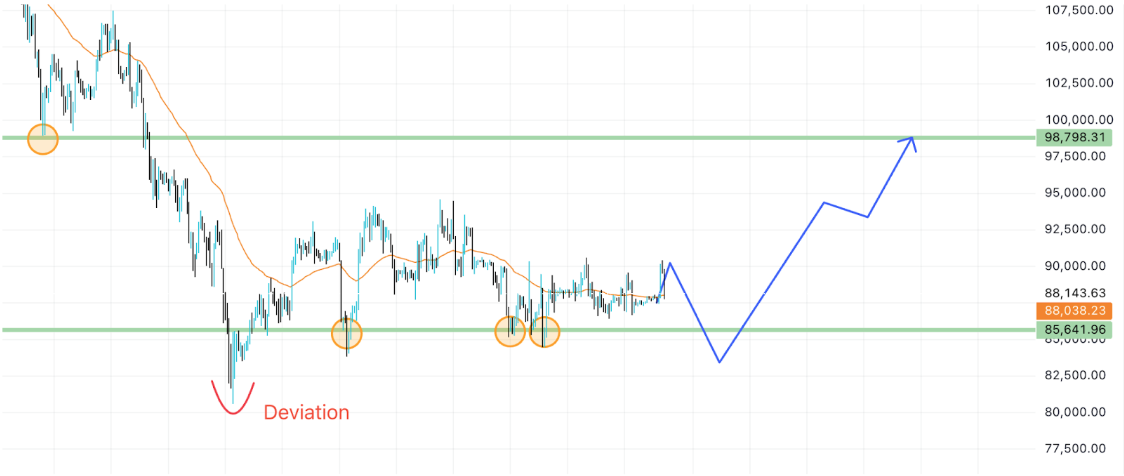
Bitcoin remains within a broader downtrend, but momentum indicators suggest the market is approaching an inflection zone. Volatility compressed into year end, while record options expiry has removed a key force suppressing price movement.
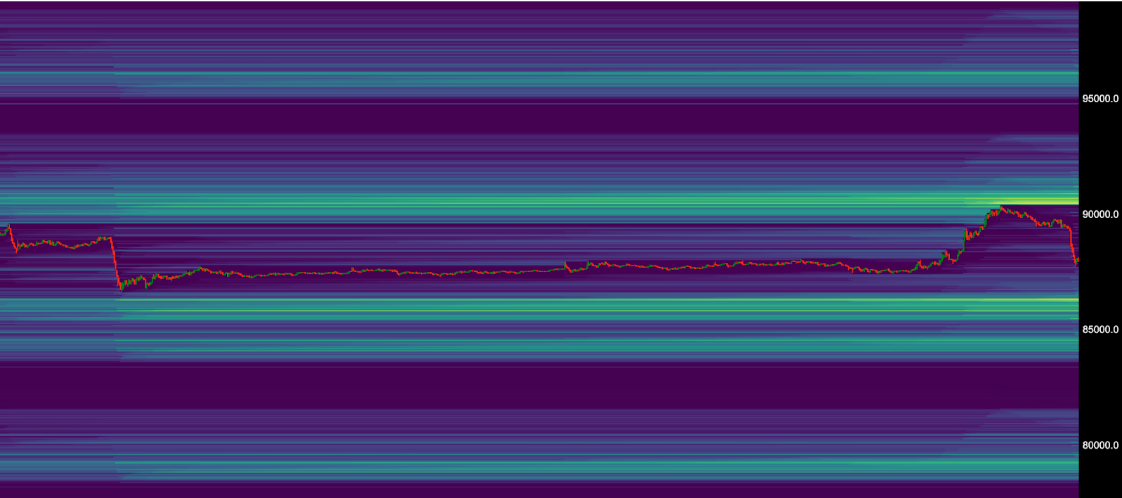
Higher-timeframe liquidity remains concentrated above price near USD 96,000, while lower-timeframe liquidity is more pronounced to the downside around USD 85,000. The primary scenario remains a downside liquidity sweep into the low USD 80,000s, followed by a reclaim of the range and a move back toward USD 94,500. Acceptance above USD 94,500 would open the path toward USD 100,000.
Ethereum
Ethereum continues to lag Bitcoin, with leverage still elevated and ETF flows weighing on performance. Downside liquidity sits near USD 2,700, while upside liquidity remains clustered around USD 3,100 to USD 3,250. Confirmation of a reversal requires acceptance above USD 3,200.
Altcoins
Altcoins remain structurally weak. Liquidity is scarce, volumes are depressed, and leadership is absent. Exposure should remain selective and defensive.
Disclaimer: This content presents objective market data and does not constitute investment advice.

Copyright © 2026 Rain Management W.L.L.